
How Shoppers Using Their Phones Can Help New Customers Find You
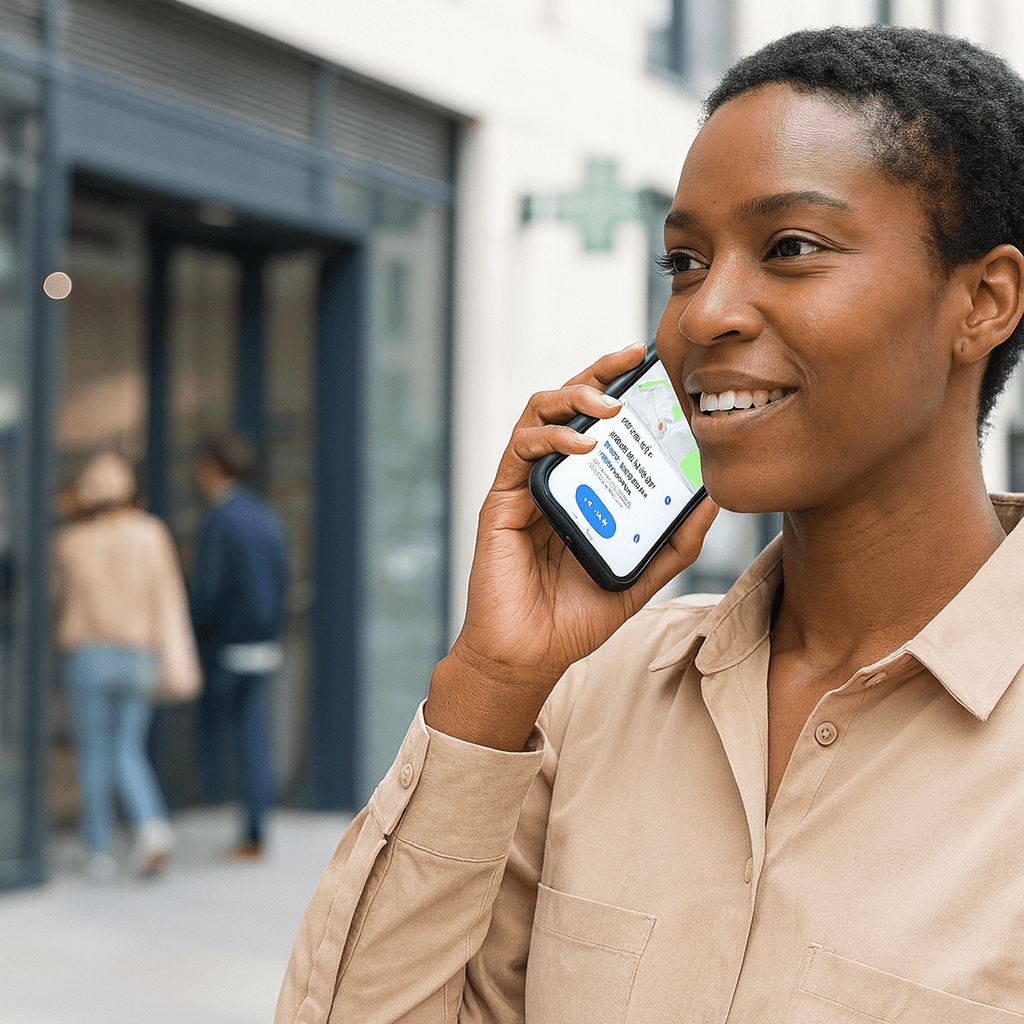
Your Google profile looks fine. Your hours are posted. You’ve got photos. Reviews are decent.
So why is the shop three blocks away getting the “near me” traffic while you’re sitting here wondering where the new customers went?
Here’s what’s actually happening: most people aren’t asking “where is [your shop name]?” They’re asking “where can I find something to help me sleep?” And their phone is answering that question before they ever hear your name.
“Where’s the nearest dispensary?” starts most customer journeys
Voice search doesn’t work like the old days of SEO. There’s no list of ten blue links. Siri, Google Assistant, Alexa — they pick one, maybe three shops, and read them out loud. That’s it. There’s no page 2 in voice search. You’re either in the conversation or you don’t exist.
The customer hears a name, gets directions, and drives there. They never opened a browser. Never saw your website. The assistant decided for them based on factors most dispensaries don’t even know exist.
And here’s the part that changes everything: most of these searches aren’t people who already know your name and just need directions. They’re discovery searches — “I need X, who has it?” You’re not competing for visibility among people who know you exist. You’re competing to be discovered by people who don’t.
That’s growth you can’t buy with ads.
What phones listen for when choosing a shop
Voice assistants aren’t mysterious. They’re just extremely literal.
When someone says “dispensary near me open now,” the phone checks four things in about two seconds:
Your hours match reality. If your profile says you close at 9 but your last post was at 8:55 saying “closing early tonight,” the system flags you as unreliable. Inconsistency kills visibility faster than bad reviews.
Your business category is clear. If you’re listed as “Retail” or “Health Store” instead of “Cannabis Dispensary,” the phone doesn’t connect the dots. It needs exact matches. Vague categories mean you don’t show up.
Your reviews are recent and strong. Voice search heavily weighs review velocity — how often you’re getting new ones. A shop with 40 reviews from last month beats a shop with 200 reviews from two years ago. The system assumes the active one is still relevant. Recency signals reliability.
Your listing has been updated lately. A post, a photo, a response to a review — anything that signals you’re paying attention. Phones interpret dormant profiles as closed or abandoned.
These aren’t SEO tricks. They’re trust signals your phone uses to avoid sending people to the wrong place.
And here’s the opportunity most operators miss: new shops with perfect info beat established competitors with outdated listings. This is the rare marketing advantage that favors attention over budget.
Use everyday language that phones understand
Here’s where most shops lose: they write for Google, not for humans.
Someone asks their phone, “Where can I get something to help me sleep?” Your product description says “Indica-dominant hybrid, high myrcene, sedative terpene profile.”
The phone doesn’t make that connection. It’s looking for the word “sleep.” Plain language wins because that’s how people actually talk.
You’ve already solved this problem in-store. When a customer says “I can’t sleep,” your budtender doesn’t respond with “try a myrcene-dominant indica.” They say “this one helps with sleep.” Your menu needs to talk the same way your budtenders do.
If your descriptions say “relaxing,” “focus,” “pain relief,” or “sleep” in simple terms, voice search can match the question to your answer. If it only says strain names and THC percentages, you’re invisible to 60% of the searches happening right now.
This isn’t dumbing it down. It’s translation. Your team already does this brilliantly face-to-face. Your online presence just needs to speak the same language.
Keep your online info clean and simple
Voice assistants are extremely unforgiving about errors. One wrong detail and they skip you entirely.
Your address is slightly off? Skipped.
Phone number has a typo? Skipped.
Hours aren’t updated after a holiday? Skipped.
The system would rather show nothing than show something wrong. And it doesn’t tell you when it’s skipping you — it just does.
Check your Google Business Profile, Apple Maps, Waze, and Yelp. Make sure the basics match everywhere. Same name format. Same address. Same phone number. Consistency is the cost of entry.
Check how your shop sounds out loud
Want to know where you actually stand? Do this tonight:
Pull out your phone. Say “dispensary near me” or “cannabis store open now” out loud. See which names it reads back.
If you’re not in the top three spoken results, customers using voice search don’t know you exist. That’s your baseline.
Now check again from different locations around your neighborhood. Voice results change based on where the person is standing. If you’re only showing up from one spot, your local relevance is weak.
This isn’t a ranking you can buy your way into. It’s a trust you build through consistent, accurate, active presence.
The shops winning voice search aren’t doing anything complicated. They’re just treating their online info like it matters as much as their in-store experience.
Because to a customer asking their phone a question while driving past five dispensaries, it does.
Leave a Reply