
The Simple Step After a Sale That Brings People Back
Your regulars? They didn’t start as regulars.
They came in once, maybe nervous, definitely curious. Your budtender nailed the vibe. The product was perfect. They left happy.
And then… nothing. No second visit. No follow-up. Just silence.
Here’s what happened: Life got loud. Work, kids, errands, Netflix. Your shop became a good memory that got buried under everything else. Not because they didn’t like you. Because you didn’t remind them you exist.
The gap between first and second visit isn’t a customer problem—it’s a design flaw. Most retailers plug this hole with retargeting ads and abandoned cart emails. Cannabis can’t. Federal restrictions killed those tools. That void is where human follow-up becomes your only competitive advantage.
And here’s what most operators miss: this isn’t just about staying top of mind. Cannabis retail suffers from a perceived power imbalance—you know everything, customers feel dumb. A post-purchase education tip recalibrates this. You shift from gatekeeper to guide, reducing the anxiety that actually prevents return visits.
The follow-up almost no one sends
You don’t need a loyalty app or an email automation sequence. You need one message, sent within 48 hours, that says: “Hey, glad you stopped by.”
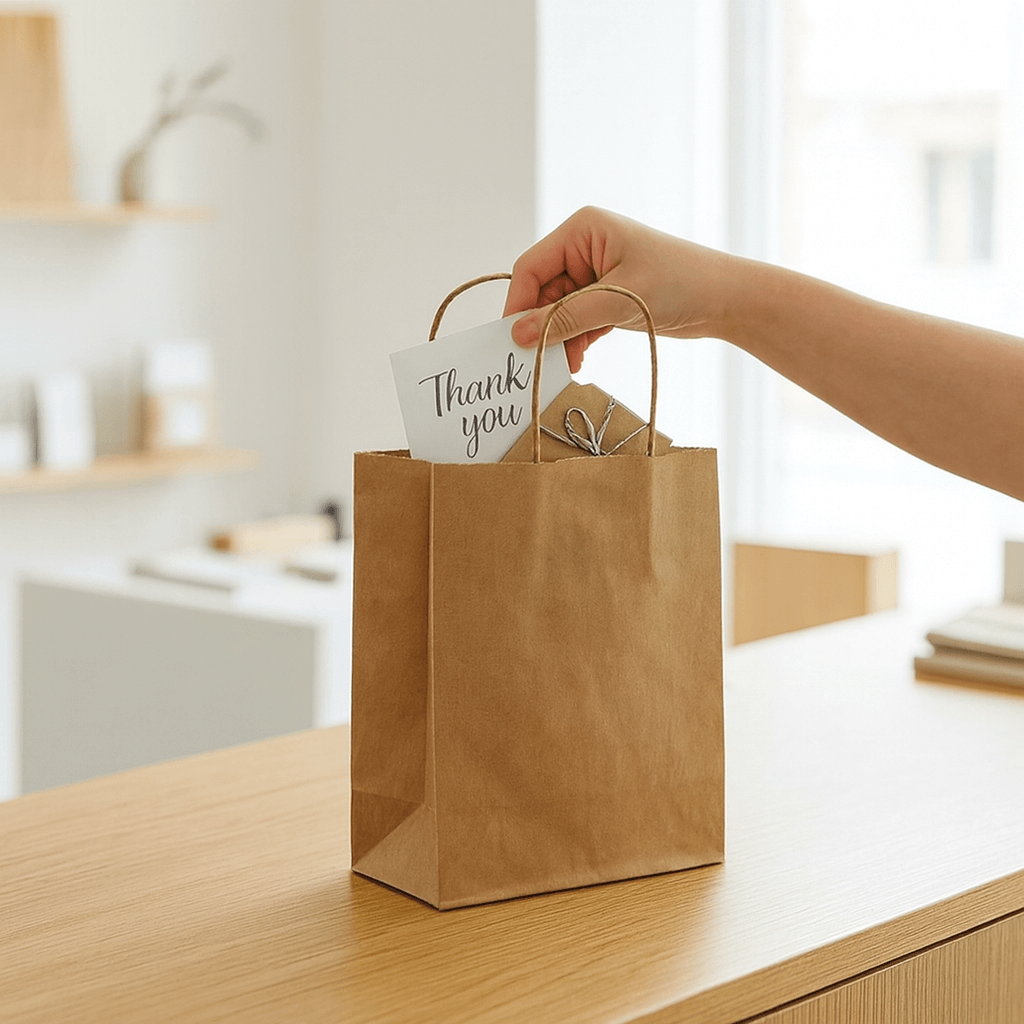
That’s it. A text. An email. Even a handwritten note if you’re feeling ambitious.
Not “Here’s 20% off your next visit.” Not “Rate us on Google.” Just: “Thanks for coming in. Hope you’re enjoying that Blue Dream.”
Why does this work? Because first-time buyers exist in hopeful uncertainty. They left satisfied, but they’re not confident yet. Your follow-up doesn’t just remind them you exist—it confirms they made the right choice. That shifts them from product satisfaction to decision satisfaction. And decision satisfaction is what sticks.
The timing matters. Send it at 48 hours. Too soon feels desperate. Too late, you’re competing with memory decay. At 48 hours, they’ve actually used the product, but the experience is still fresh—making your guidance feel timely, not presumptive.
People remember how you made them feel after they gave you money. Every other business ghosts them post-purchase. You didn’t. That’s the entire competitive advantage.
Give them something useful, not promotional
Here’s where dispensaries who get this right separate from everyone else. Don’t just say thanks—give them one small piece of guidance they didn’t ask for but actually need.
“Blue Dream hits different depending on time of day. Morning = focus. Evening = smooth landing.”
“Keep those gummies in a cool spot. Heat turns them into one big gummy.”
“Most people use too much their first time. Start with half and see how you feel in 90 minutes.”
This is what progressive shops are discovering: micro-education works as a retention strategy. You’re not selling. You’re teaching. And teaching reframes your dispensary from vendor to advisor—a category position that’s nearly impossible for competitors to steal.
The best part? This addresses a problem most operators don’t realize they have: customers often can’t recall strain names or product specifics 48 hours later.
Your follow-up serves as both reminder and mini-education, creating a reference point in their head they can return to.
But there’s a tension here you need to manage. First-time customers need guidance, but they’re also information-saturated from their first visit. Give them just enough additional value without triggering decision fatigue. One tip. Not a guide. Not a lecture. One thing they can use right now.
Here’s the shift happening in the industry: leading dispensaries are abandoning point-based loyalty programs in favor of text-based relationship building. They’re realizing cannabis customers value feeling known over feeling rewarded. The breakthrough isn’t technology—it’s recognizing that connection depth matters more than transaction frequency.
Some shops are even testing messages with zero calls-to-action—just gratitude and useful info. Early signals suggest these generate higher 30-day return rates than discount messages. Makes sense. When you give unexpected value—useful guidance they didn’t pay for—customers feel a subtle obligation to reciprocate. Usually through loyalty and repeat visits. Care doesn’t feel like a campaign.
Make the next visit stupidly easy
Somewhere in that message, give them a reason and a method to come back. Not aggressive. Just clear.
“When you’re ready to restock, just text this number. We’ll have it ready.”
“Next time you’re in, ask about our new sativa lineup. Your budtender Maya knows her stuff.”
One link. One action. No pressure, just convenience.
Here’s a principle that matters more than most operators realize: when products are commoditized—and let’s be honest, most dispensaries carry the same strains despite all the branding theater—reducing friction for repeat visits becomes your primary competitive advantage. Once product quality reaches “good enough,” convenience compounds faster than quality improvements ever will.
People want to come back. They just need a gentle shove in the right direction. Life is chaotic. Decision fatigue is real. If you make returning feel like one more thing they have to figure out, they won’t.
But if you make it feel like continuing a conversation that already started? They show up.
Including a “next time” suggestion creates an open loop their brain wants to close. That psychological pull toward completion is working for you even when you’re not thinking about it.
Watch your 30-day number
You don’t need an analytics dashboard to know if this works. Just track one thing: How many first-time customers come back within 30 days?
Right now, for most dispensaries, that number is embarrassingly low. Maybe 15%. Maybe 20% if you’re lucky.
Send one good follow-up message consistently, and watch it climb. 25%. 30%. Higher if you’re getting the tone right.
Here’s what smart operators are discovering: follow-up open rate predicts 30-day retention more accurately than in-store satisfaction scores. What happens after the visit matters more than what happens during.
That’s not magic. That’s just understanding how memory works. The human brain doesn’t passively retain every positive experience—it prioritizes what gets reinforced. Without reinforcement, even great experiences fade into “I should go back there sometime” (which functionally means never).
And here’s the compounding part: trust doesn’t build through intensity. It builds through consistency. One excellent in-store experience plus one thoughtful follow-up creates exponentially more trust than one excellent experience alone.
The follow-up proves the first interaction wasn’t performative. Customers inherently distrust vendors because vendor incentives conflict with customer needs. But a follow-up that gives value without asking breaks this assumption.
Think about the Peak-End Rule: people judge experiences based on their peak moment and how things ended. Your in-store visit is the peak. Your follow-up is the end. A good follow-up retroactively improves how they remember the entire experience.
And here’s something that might surprise you: moving from zero follow-up to one creates disproportionate impact. Not because one is optimal, but because crossing from nothing to something triggers reciprocity and memorability in ways that matter more than optimization ever will.
What this actually requires
If you’re going to do this, understand what it demands beyond the 90 seconds to send a text.
Your budtenders need to start documenting customer interactions—even just mental notes—knowing that information will feed follow-up messages.
“Recommended Blue Dream for morning focus” becomes the content of tomorrow’s text. Because budtenders hold customer context but marketers control messaging tools, successful shops are creating lightweight handoffs—shared notes, Slack channels, quick debriefs. This is CRM as culture rather than platform.
Most dispensaries assume follow-up is marketing’s job. But the highest-performing follow-ups reference specific budtender interactions or product recommendations. That information lives with floor staff, not marketing teams. You’ll need to figure out how that handoff works.
There’s also a tension between authenticity and systematization you can’t ignore. The follow-up needs to feel personal, but scale requires process. Too systematic and it reads as automated spam. Too personalized and it’s unsustainable. Finding that balance is the work.
And be honest about this: the article sells “send one text” as low-friction implementation. But doing it well requires operational changes—staff training on documentation, messaging workflow creation, response handling protocols.
The gap between “easy tactic” and “actual implementation” could cause abandonment when complexity reveals itself. Better to know that now.
Here’s another thing: if you’re tempted to A/B test everything, be careful. Testing requires standardization, and too much standardization kills the human warmth that makes this work. Shops that treat this like scientific marketing lose the authenticity. Shops that refuse to optimize leave advantage on the table. That’s the real tension.
Why this matters more than you think
Good experiences don’t sell themselves. This is the hidden assumption killing retention at most dispensaries. Great experiences without reinforcement lose to mediocre experiences with consistent touchpoints. Memory doesn’t operate on merit—it operates on repetition and emotional tagging.
And here’s something that might surprise you: data from progressive shops suggests customers respond more strongly to recognition and expertise than to price cuts. Discounting may actually reduce perceived value and attract price-sensitive customers less likely to become regulars.
Many operators default to email because it feels more “official.” But SMS has 98% open rates versus 20% for email, gets read in 90 seconds versus 90 minutes, and feels more personal. The professionalism bias is costing you engagement.
And most operators wait for “the right CRM” or “proper automation” before starting. But you can start with phone contacts and manual texts today. Technology is enhancement, not prerequisite.
Over time, if you do this consistently, something else happens. You start accumulating response data that reveals which products need more education, which budtenders build the strongest relationships, and which customer segments are most retention-prone. This creates a compounding loop: follow-up drives return visit, return visit provides more customer data, better data enables more personalized follow-up, more personalized follow-up drives faster return. This isn’t just a tactic—it’s building an intelligence system that creates accelerating advantage.
Beyond direct retention, you’ll likely see secondary benefits. Customers who receive thoughtful follow-ups are more likely to leave reviews—reciprocity effect. That improves local search ranking. They’re also more likely to recommend you, and the follow-up gives them concrete evidence they can cite: “They even texted me tips on how to use it.” Word-of-mouth shifts from “good product” to “they actually care.”
Even customers who don’t respond to your follow-ups might still return within 30 days. Don’t judge effectiveness only on response rate. The follow-up works through multiple mechanisms—direct engagement and passive reinforcement.
But here’s a diagnostic insight: customers who actively ignore follow-ups (don’t open, don’t respond, don’t return) might reveal product or experience issues you missed. Silence patterns could be quality signals, not just disengagement.
And here’s the strategic piece most people miss: multi-state operators with hundreds of locations can’t personalize at this level efficiently. If independents own this practice, it becomes a sustainable competitive moat against scale players. Relationships scale through systems, but systems kill relationships without humanity. The winning move is systems that enable humanity rather than replace it. The local coffee shop competes with Starbucks by remembering your order. You’re doing the same thing, just digitized. “The usual?” is powerful.
Your follow-up message is the digital version of that recognition.
What to test first
Don’t just implement this blindly. Run some experiments.
Try different timing: 24 hours vs 48 hours vs 72 hours. You might find your customer base has different optimal windows depending on product type or experience level.
Test message style: “Thanks + tip” vs “Thanks + question.” Questions like “How’s the Blue Dream treating you?” might generate replies that turn monologue into dialogue.
Test your medium: SMS vs email vs handwritten postcard. Hypothesis worth proving: physical mail probably has highest impact but can’t scale; SMS likely gets best response rate; email probably has worst performance but easiest tracking.
Here’s the cleanest way to measure actual impact: send follow-ups only to odd-numbered transactions for 30 days. Compare the 30-day return rate between odd (follow-up) and even (control) customers. That isolates the effect from everything else happening in your business.
Try different content angles: educational tip vs product care advice vs community building (“Join us Thursday for demo night”). Measure which drives actual behavior versus which just drives warm feelings. They’re not always the same thing.
Small sample test worth considering: 30-second budtender voice notes versus text messages. Voice adds authenticity signal but is harder to scale. Question: does engagement lift justify operational cost? Test with 50 customers before committing.
Test budtender attribution: include budtender name or photo in the follow-up (“Maya wanted me to pass along…”) versus generic shop message. Does personal attribution increase relationship stickiness and drive budtender-specific return visits?
Test frequency boundaries: what happens if you send a second follow-up at day 20 (“Haven’t seen you in a bit—everything treating you well?”)? Does this increase 30-day return rate or feel pushy?
Some operators notice follow-ups sent during evening hours (7-9pm) get higher response rates than business hours. Suggests customers engage with cannabis communication in private, relaxed contexts rather than during the work day. Worth testing.
There’s also a signal worth watching: edibles buyers may engage more with follow-ups than flower buyers. Possible explanation—edibles require more dosage guidance, making education tips more immediately valuable. This suggests content personalization by product type might increase effectiveness.
This is already happening
Luxury retailers have used handwritten thank-you notes for decades.
Nordstrom. Small boutiques. They learned early that personal beats perfect.
Cannabis is just running the same playbook with SMS instead of cardstock.
Remember Birchbox? They succeeded not through product superiority but through those little education cards explaining how to use each item. You’re doing the same thing, just unbundled from the product packaging.
The best car salespeople send “how’s your new car” messages after purchase. They discovered the relationship determines service loyalty and referrals more than the initial sale. Cannabis has the same opportunity. The follow-up determines lifetime value, not the first transaction.
OpenTable created a touchpoint after the meal—review request, return booking prompt—that turned one-time diners into repeat customers. The system made it stupidly easy to return. You need the same “tap to reorder” simplicity.
Old-school barbers gave you a card with your next appointment pre-written. Created a commitment device and removed friction. Modern equivalent: “Text us when you’re ready to restock—we’ll have it waiting.” Reduce decision steps between intent and action.
Tupperware sales reps called buyers a week later to check satisfaction, offer tips, schedule the next party. This wasn’t altruism—it turned customers into hosts, creating a referral engine. Post-purchase care creates evangelists, not just repeat buyers.
The thing nobody says out loud
Retention isn’t a marketing problem. It’s a memory problem.
Your customers aren’t choosing your competitor. They’re just forgetting you exist. The dispensary that stays in their head is the one that stays in their wallet.
You don’t need a budget for this. You don’t need software. You need 90 seconds after someone walks out your door to send a message that sounds like a human, not a campaign.
If this scales across the industry, customer expectations will shift. Follow-ups will become table stakes rather than differentiators. That raises the bar for quality—generic messages will lose effectiveness. But right now, today, most dispensaries aren’t doing this at all.
Which means the ones who start now are building an advantage that compounds while everyone else is still debating whether it’s worth the effort.
Do it, and the second visit stops being a mystery. It becomes the obvious next step.
Leave a Reply