
Why You Keep Running Out of Popular Products (And How to Stop It)
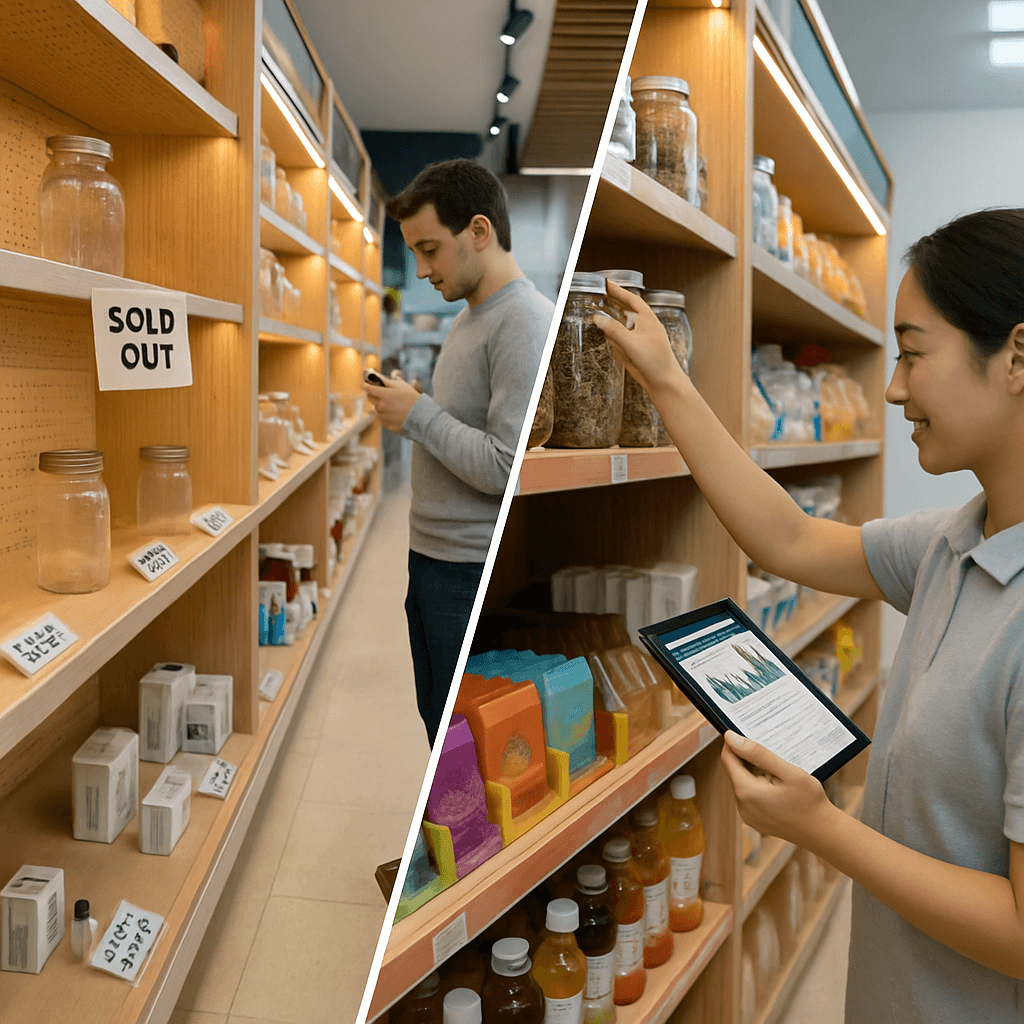
Three customers asked for that pre-roll pack this morning. You’ve been sold out since Wednesday.
Tomorrow you’ll get the shipment. Tomorrow those three customers will be at another shop.
This keeps happening because you’re treating inventory like a guessing game instead of a conversation your business is already having with you.
When popular items disappear, customers do too
Here’s what a stockout actually costs you.
Not the sale. That’s obvious. What you lose is the automatic assumption that you’ll have what they need.
Next time they’re driving over, there’s a new thought: “I should probably call first.” Then it becomes: “Maybe I’ll check that other place.” Then they’re just gone.
You didn’t lose them to better products or lower prices. You lost them because they can’t count on you.
Think about where you buy milk. It’s probably not the store with the best prices or widest selection. It’s the one that’s never out. That’s not convenience—that’s earned reliability. Cannabis is heading the same direction.
When products look similar across shops, “we always have it” becomes the entire competitive position.
The real reason your inventory keeps surprising you
Most dispensaries order based on memory, not evidence.
“That Blue Dream moved fast last week” isn’t data. It’s a feeling. And feelings are terrible at inventory management because your brain remembers the dramatic stuff—the bulk buyer who cleared the shelf, the guy who complained about being sold out.
Your brain doesn’t remember the thirty people who quietly bought your steady sellers. The boring products that actually pay your bills.
So you restock the thing that felt hot and ignore the thing that’s been selling twelve units every single week for three months. Then you’re shocked when the steady seller runs out.
Or worse—you just order the same amounts every cycle like clockwork, wondering why half your inventory collects dust while the other half vanishes before you notice.
The numbers are sitting in your POS right now. You’re just not looking at them before you hit zero.
Look at one simple report each week
Monday morning. Five minutes. That’s all this takes.
Pull last week’s sales. Sort by units sold, not revenue. Revenue lies—one person buying bulk makes something look hot when it’s actually just expensive.
Now look for three things:
What jumped? If something climbed from fifteen units to twenty-five in a week, you’re watching demand build in real time. That’s your signal to order more before next week slaps you with a stockout.
What’s steady? Those boring mid-performers moving ten to fifteen units every single week? They’re your actual paycheck. Stock them deeper. They don’t spike, so they don’t scare you into action. That’s exactly why you run out.
What dropped? Stop reflexively reordering something just because you’ve always carried it. If nobody’s buying it, your capital is sleeping.
This isn’t analytics. It’s just looking before you order instead of after you’re empty.
Compare this week to two weeks ago. Then to a month ago. Patterns emerge fast once you’re paying attention.
What your staff knows that reports can’t
Your POS shows what people bought. Your budtenders know what people wanted to buy but couldn’t.
Four different customers asked about live rosin this week. You don’t carry it. Your sales report shows nothing. Your team heard it four times. That’s not noise—that’s the market sending you a memo.
Every Friday, ask your floor team one question: “What did multiple people request this week that we didn’t have?”
Not every request deserves action. Someone asking for CBG flower once? That’s random. Three people in two days asking about the same CBD ratio? That’s signal.
Those conversations are free market research happening in real time. Most shops ignore them. Smart shops treat them like advance orders.
Your team hears trends forming two to three weeks before they show up in your data. That lead time is the difference between capitalizing and catching up.
Build a small buffer of your top items
If something sells twenty units a week and you stock twenty-two, you’re one busy Tuesday away from apologizing to customers until next shipment.
Keep thirty. Maybe thirty-five.
That extra inventory isn’t waste. It’s insurance against normal chaos—shipments running late, unexpected rushes, your supplier shorting the order by a case.
Here’s the math everyone gets wrong: the cost of holding an extra week of your bestsellers is tiny. Maybe it ties up a few hundred dollars. The cost of training customers you’re unreliable? That’s permanent.
Think about your medical patients. They need their CBD tincture like someone needs their pharmacy prescription. When you’re out, they can’t just wait. They find another shop that treats their needs seriously.
Your recreational customers are more forgiving, but only to a point. Each stockout teaches them to have a backup plan. Eventually the backup becomes the default.
You’re not building a warehouse. You’re building enough cushion that regular variance doesn’t turn into emergency reorders at markup while your regulars learn to shop elsewhere.
Your top five products deserve different treatment than your other fifty. They’re the ones people come specifically for. Treat them that way.
A predictable shelf makes a predictable business
The shops winning right now aren’t the ones with exotic inventory or rock-bottom prices.
They’re the ones where customers don’t need contingency plans.
Where people don’t call ahead to check stock. Where regulars just show up knowing you’ll have what they need. Where new customers become regulars because you delivered on the basics every single time.
That reliability compounds. Every kept promise makes the next visit more likely. Every stockout makes them hedge.
Most dispensaries are playing a game they
don’t realize: training customers whether to trust them or not. Every restock decision is a vote for which side you’re on.
Start this Monday. Five minutes. Check what moved, compare to last week, adjust what you order.
Ask your team Friday what people wanted that you couldn’t deliver.
Keep a small buffer on your bestsellers.
That’s it. Small attention repeated weekly beats big reactions every time.
The shops that grow aren’t the ones recovering fastest from stockouts. They’re the ones that rarely have them in the first place.
Leave a Reply